
Introduction
Welcome to my corner! This week, I'm sharing my thoughts on the film CinemAbility: The Art of Inclusion. The TCM television channel played it on July 29, 2025. I recorded it then and just got around to watching it recently. Enjoy!
CinemaAbility: The Art of Inclusion
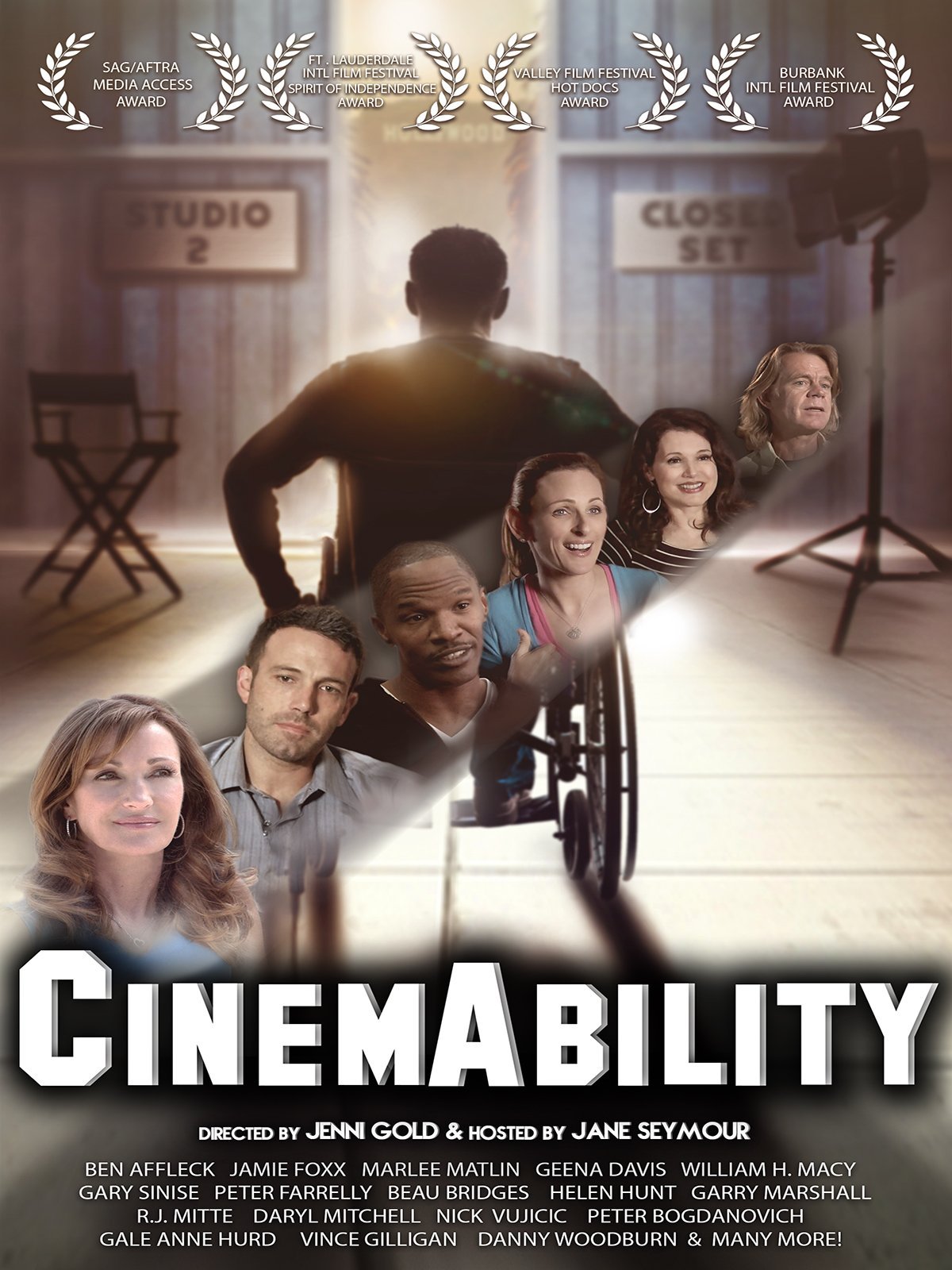
This dynamic documentary will take a detailed look at the evolution of "disability" themes in entertainment, from film and TV to the Web, to see if the media has had a hand in transforming the societal inclusion of those with disabilities. Our in-depth investigation has gone behind the scenes to interview Filmmakers, Studio Executives, Film Historians, and Celebrities, and utilizes vivid clips from Hollywood's most beloved motion pictures and TV shows to focus attention on the powerful impact that entertainment and the media can have on society. Do disability portrayals in the media impact society? Or, does the media simply reflect the public's ever-changing attitudes? This important documentary explores these questions and more to examine whether the media has played a role in transforming societal inclusion for people with disabilities and to demonstrate how an enlightened understanding of disability can have a positive impact on the world.
Plot: Filmmaker Jenni Gold explores disability storylines in film, television and advertising to see if the media has helped societal inclusion for people with disabilities. An investigation into the way media portrayals impact the actual inclusion of people with disabilities in society.
Celebrities included: Vince Gilligan (Breaking Bad), Marlee Matlin (deaf), Ben Affleck major actor), Kyle MacLachlan (Desperate Housewives), Bryan Cranston (Breaking Bad), Geena Davis (Geena Davis Institute on Gender in Media), William H. Macy (Door to Door), Helen Hunt (The Sessions), Jane Seymour (host), Richard Donner (Inside Moves), Jamie Foxx (Ray), Gary Sinise (Forrest Gump), Kellie Martin (Life Goes On television show), Beau Bridges (The Other Side of the Mountain), RJ Mitte (cerebral palsy), Danny Woodburn (dwarfism), Daryl Mitchell (paralyzed), Angela Rockwood (quadriplegic), Adam Arkin (The Sessions), Garry Marshal (The Princess Diaries), James Keach (major director/producer), Paris Barclay (Glee), Tobias Forrest (spinal injury), James Troesh (quadriplegic), Peter Farelly (There's Something about Mary and Me, Myself & Irene), Marc Cherry (Desperate Housewives), Robert David Hall (prosthetic legs), Peter Bogdanovich (Mask), Michael Apted (major director/producer), David L. Lander (multiple sclerosis), Camryn Manheim (The Loretta Claiborne Story), Ken Howard (president of the Screen Actors Guild), Gale Annie Hurd (major producer), Randal Kleiser (major director), Tom Sherak (president of the Academy of Motion Picture Arts and Sciences), Danny Murphy (quadriplegic), Taylor Hackford (Ray), Alan Toy (polio survivor), Fern Field (major producer), Rick Finkelstein (paralyzed), Teal Sherer (disabled), Geri Jewell (cerebral palsy), Phil Keogahan (The Amazing Race), Nic Vujicic (tetra-amelia syndrome) and Suzanne Lyons (major producer).
Technical Aspects: The director was Jenni Gold. The producers were Sean Michael Arthur, Jenni Gold, Jeff Maynard and Tracie Fiss. The screenwriters were Jenni Gold and Samuel W. Reed. Gold Pictures was the production company. The movie was released on October 1, 2012.
From TCM: Jane Wyman in Johnny Belinda (1948), Jon Voight in Coming Home (1978) and Jammie Foxx in Ray (2004) all won Oscars for playing characters with disabilities they did not have. Disabled veteran Harold Russell won an Oscar for playing a man who had lost his hands in World War II in The Best Years of Our Lives (1946) but didn't act again until Inside Moves (1980), 34 years later. It would take more time than that for the Academy to honor another actor with a disability, when Marlee Matlin won Best Actress for Children of a Lesser God (1986). Even as actors with disabilities have begun winning roles in film and on television, there are still relatively few people with disabilities working behind the camera. Jenni Gold's 2018 documentary, CinemAbility: The Art of Inclusion looks at the broad range of Hollywood's treatment of the "other", placing depictions of disability within the context of the big and small screen's treatments of race, gender and sexual orientation. It moves from the silent films, in which Lon Chaney portrayed a variety of characters with disabilities, through Tod Browning's Freaks (1932), which used actors with disabilities, to more recent inroads by actors with disabilities like Matlin, Daryl Mitchell and Geri Jewell, an actress with cerebral palsy who starred on The Facts of Life. In addition, the documentary considers the stereotypes that have developed about people with disabilities on screen: the noble innocent, the bitter recluse, the sympathetic suicide. Opinions expressed range from those of Jewell, who appreciates the challenge facing actors who assume disabilities in front of the camera, to those of writer-producer Janis Hirsch, a polio survivor who says, "An able-bodied person in a wheelchair is the same as having a white person in blackface."
When an article about Gold appeared in the Los Angeles Times' Valley edition, some producers she knew contacted her about doing a documentary on her work. She felt that would be too limited, instead proposing the idea for CinemAbility. The producers passed, protesting that it would be too much work, but Gold persisted. Before long, she had assembled an impressive list of interview subjects, including filmmakers with disabilities and A-list, Oscar-winning actors eager to share their experiences playing characters with disabilities and dealing with disability issues in their own lives. In some cases, her subjects even came to a new understanding of the importance of inclusion, both in casting people with disabilities and in employing them in front of and behind the camera. As she worked, Gold began to see links between the way people with disabilities were portrayed and public attitudes toward disability issues, as when a series of positive portrayals in the 1980s was followed by the passage of the Americans with Disabilities Act in 1990.
CinemAbility: The Art of Inclusion was in development for more than a decade, premiering in an earlier form at the Burbank International Film Festival, where it won a 2012 award for diversity. It also won Best Documentary at the Valley Film Festival in 2013.
Along the way, Gold learned some surprising things about disability representation. She hadn't expected the series Ironside, starring Raymond Burr as a detective in a wheelchair, to be a positive depiction because it was made in the 1960s, but when she saw it, she was surprised at how much it focused on his tenaciousness and ability to solve crimes. She also unearthed a 1951 daytime drama called Miss Susan created for Susan Peters, a young actress who was paralyzed from the waist down after a hunting accident.
Final thoughts: What an eye-opening movie. I've never thought of myself as someone who enjoys documentaries, but I always seem to enjoy watching them anyway. I love learning the history behind something, which is generally what documentaries are for.
Being able to see the progression of disabilities in media from the beginning of film to now was amazing. I particularly enjoyed learning about early portrayals of disability in film, such as Charlie Chaplin's and Lon Chaney's movies.
Chaney was an amazing actor; he could play any character. He once played a character with no legs, and another with no arms, both of whom happened to be villains. And in a time with no elaborate special effects, he had to bind his limbs in such a way that the camera couldn't see. Absolutely remarkable.
It's great to see the evolution of disability representation in film from beginning to now, and to learn how important inclusivity is to everyone. That's why I think you should give this movie a watch.
Where to watch it: According to Google, CinemAbility: The Art of Inclusion is currently available on Tubi and The Roku Channel. You can also purchase or rent a digital copy for a few dollars. I've also donated a DVD copy of the film to the Emil M. Larson Public Library in Clark for you all to enjoy, if you choose.
That's it for this week! What were your thoughts? Feel free to share them with us! You can call us, email us, visit us at the office, leave us a comment or message on Facebook, or even mail us something. Keep the comments, suggestions, questions, submissions, etc. coming our way! We'd love to hear from you!